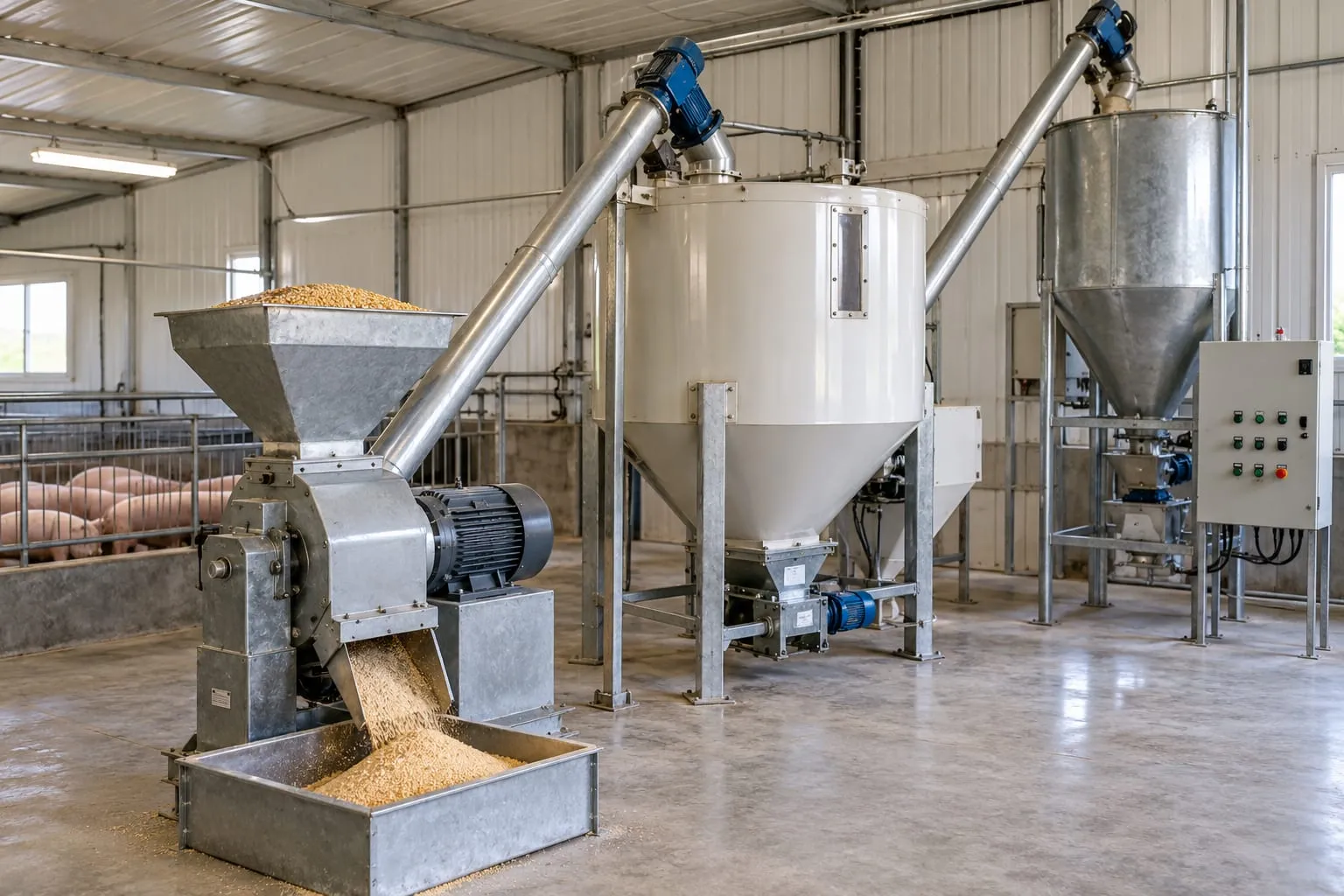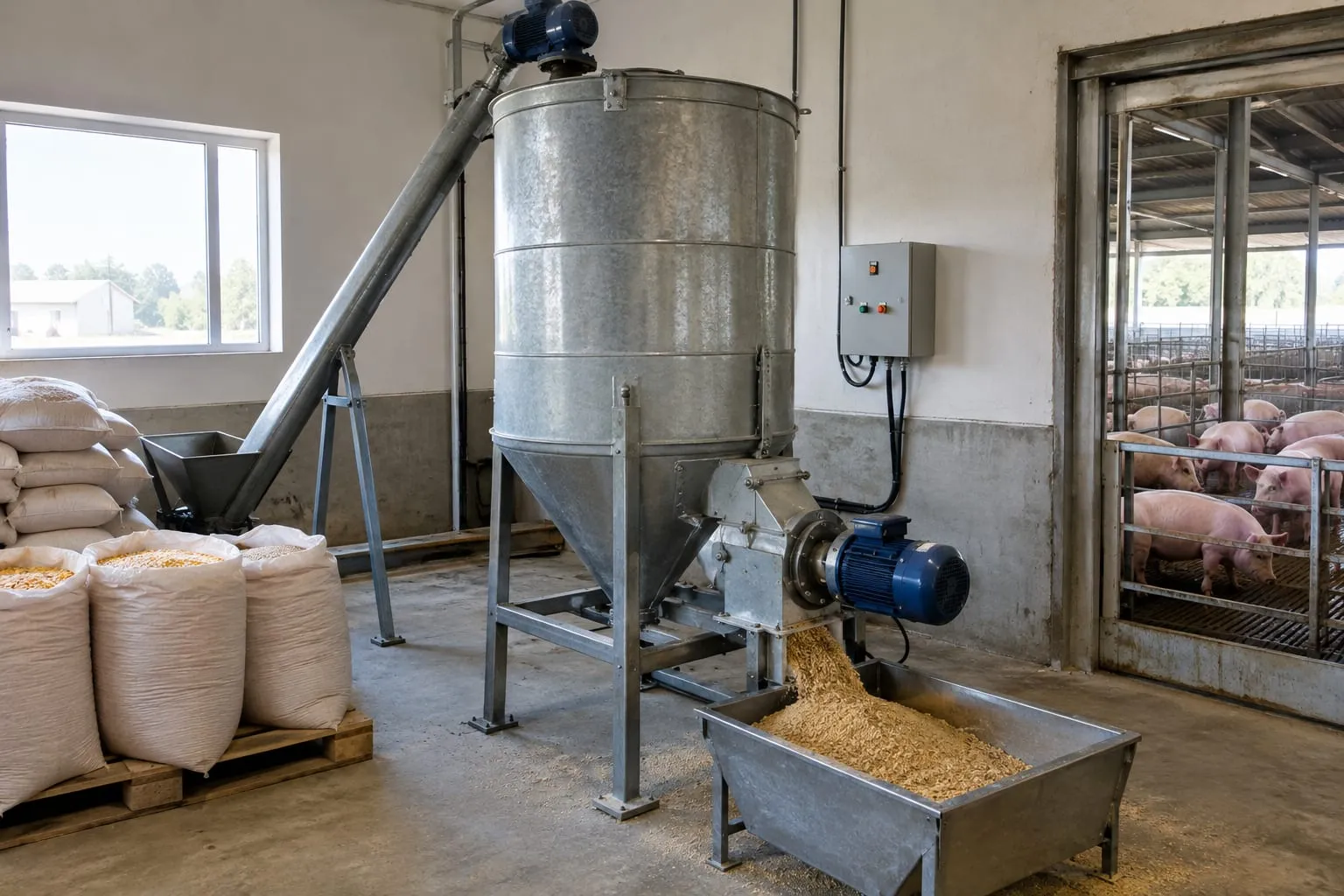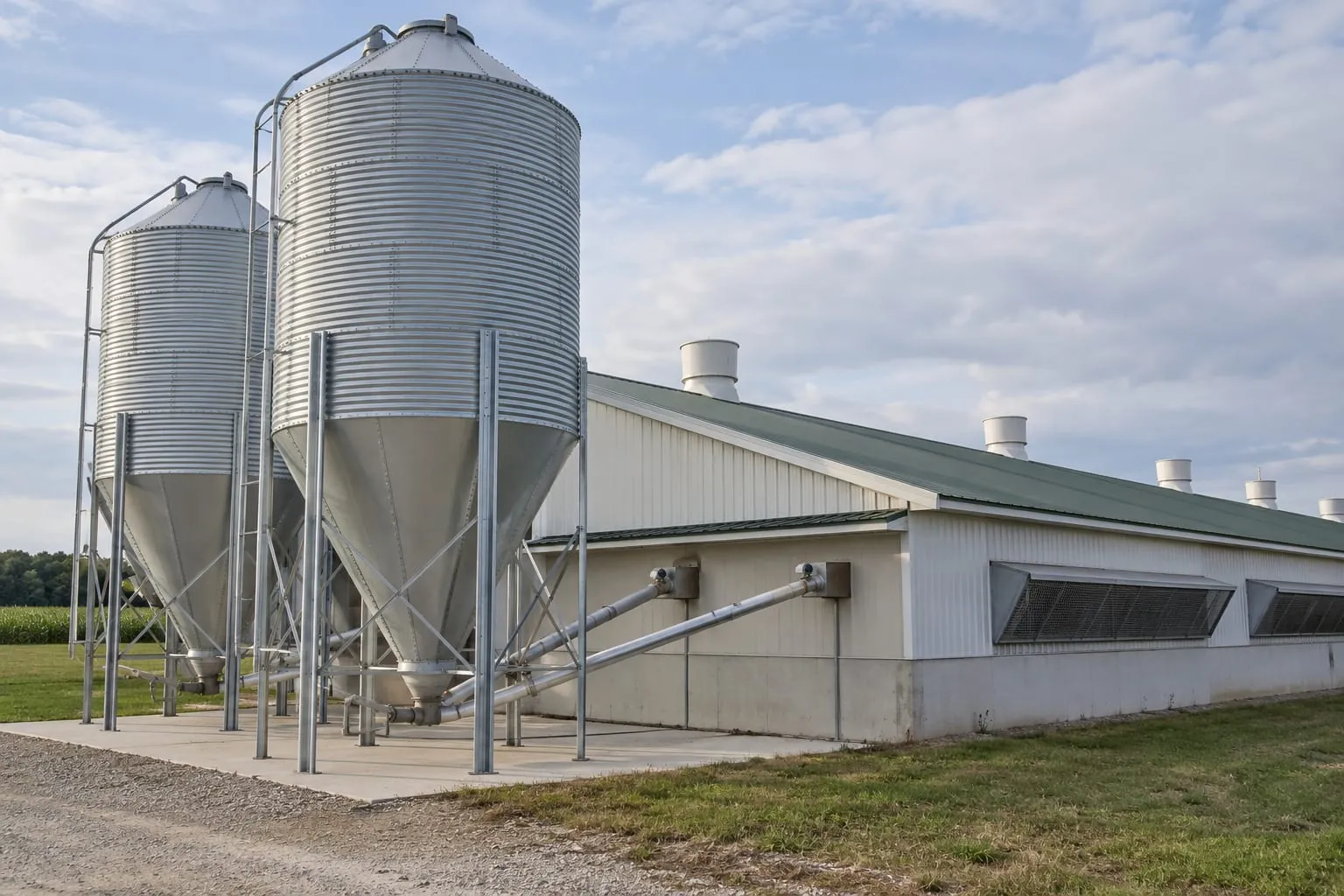
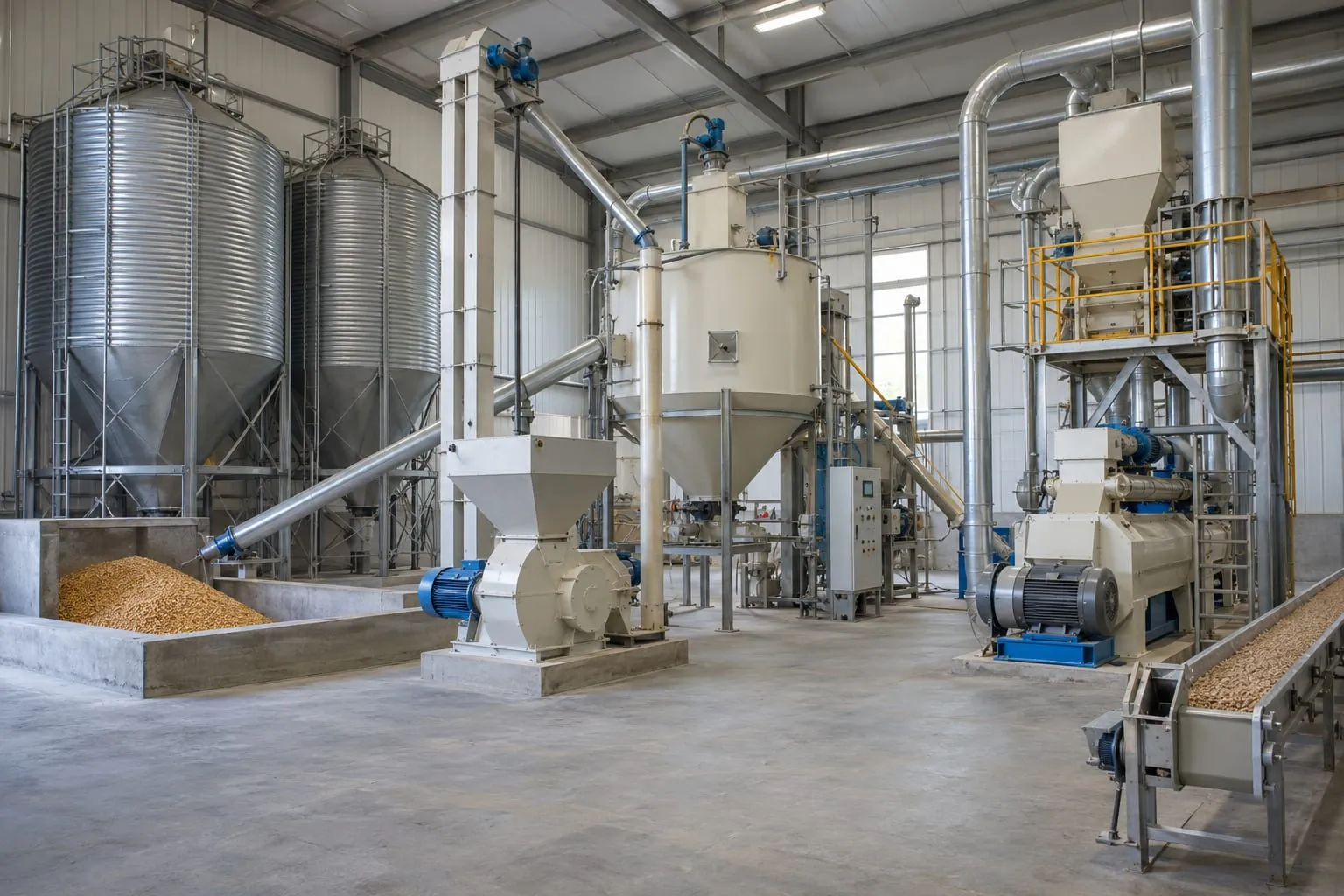
Two scales of feed mill
A farm mixing unit makes feed for one farm; a complete feed mill makes feed in larger batches with more control. The compact unit grinds grain and mixes it with other ingredients. A complete mill adds raw-material intake and cleaning, batching, mixing, optional pelleting and storage of finished feed, with a control system for formulas and batches.
Process flow of a complete mill
- Intake and cleaning: raw materials arrive, are weighed and cleaned of foreign matter.
- Grinding: grain and other ingredients are ground to the particle size needed.
- Batching: each ingredient is weighed into the formula.
- Mixing: the batch is mixed to an even feed.
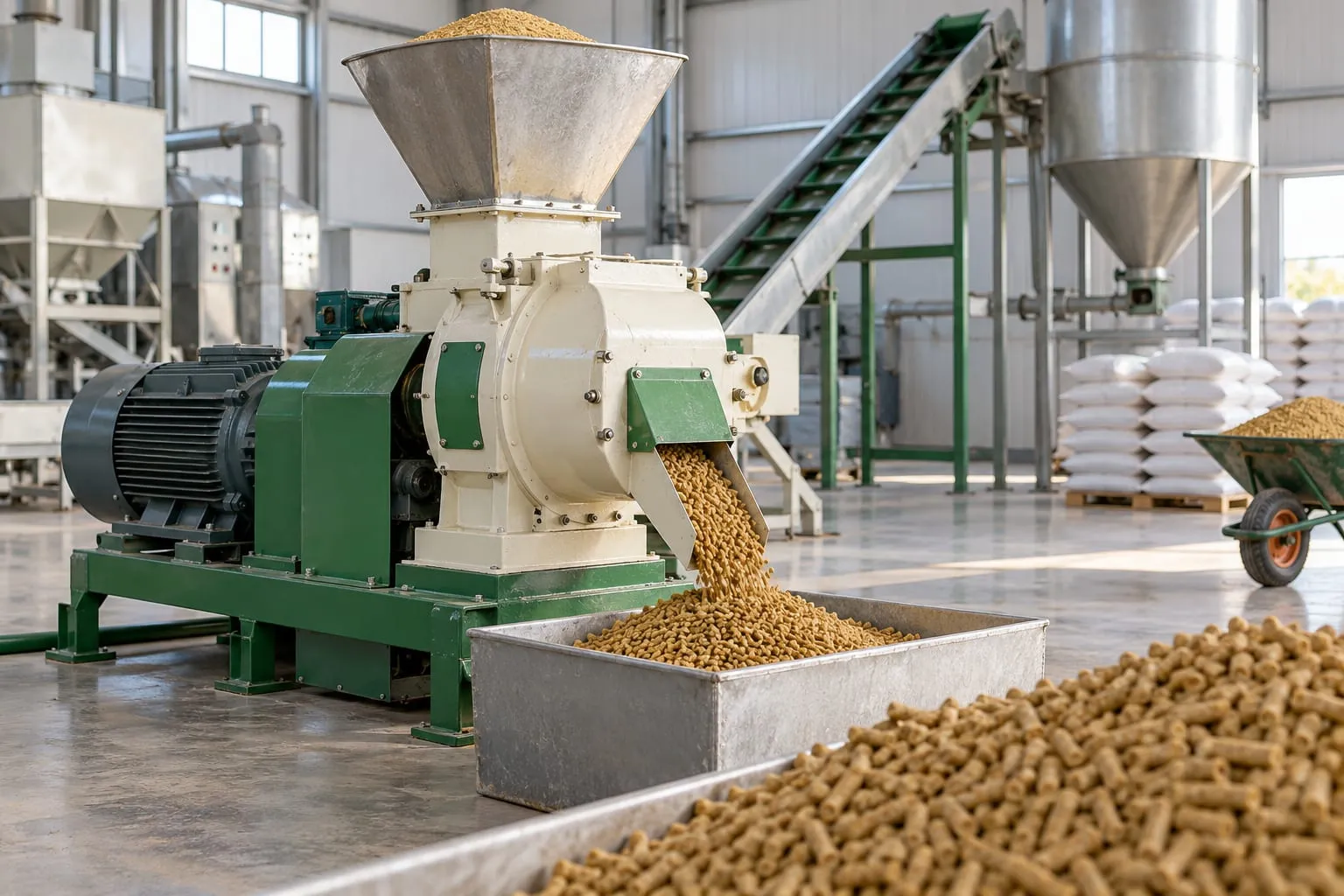
- Pelleting (optional): conditioned feed is pressed through a die.
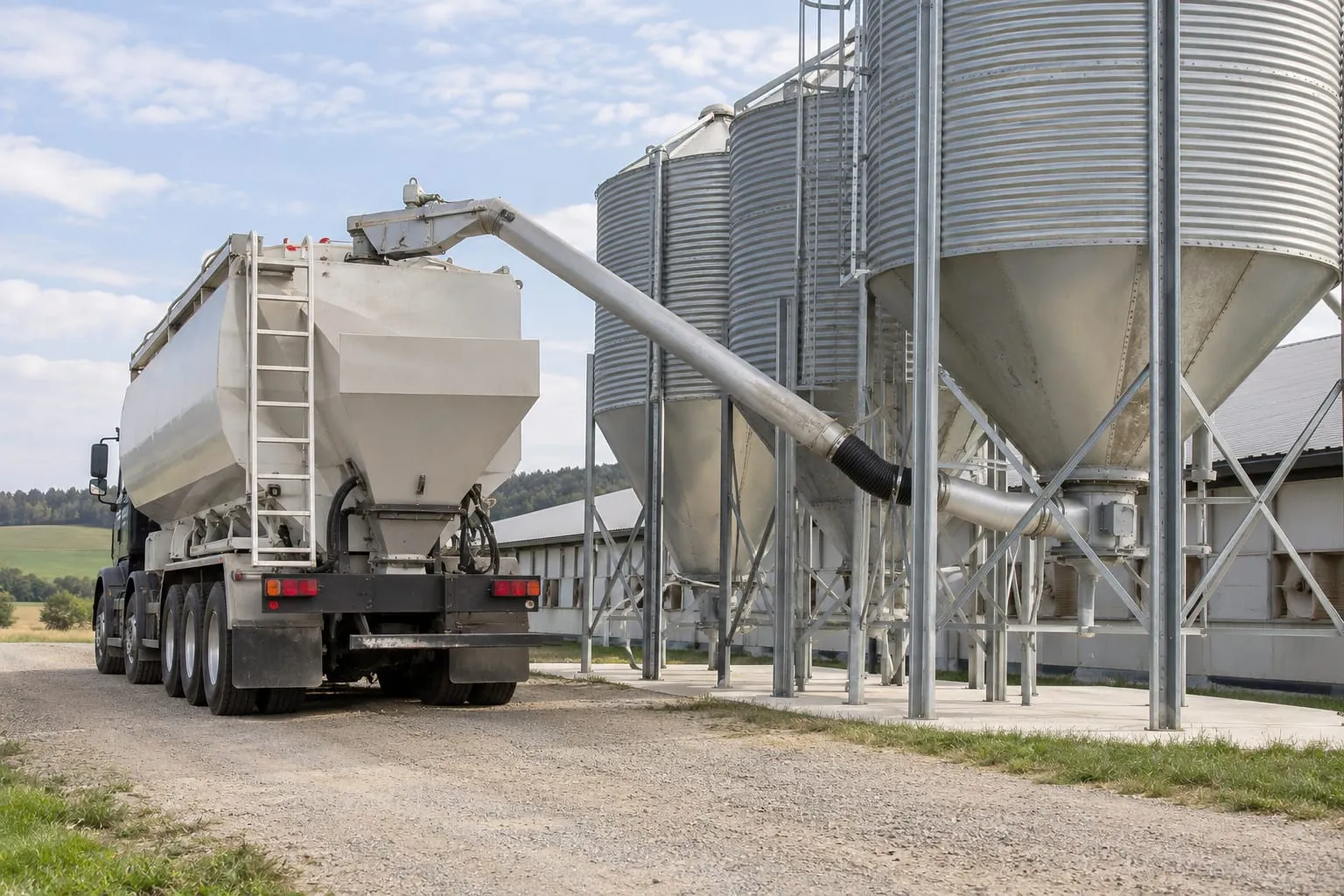
- Storage and loading: finished feed goes to bins or a bulk truck.
What decides the size
| Input | Why it matters |
|---|---|
| Daily feed use | Sets the output per hour and the size of bins |
| Raw materials | Sets intake, cleaning and grinding equipment |
| Formulas | Sets the number of batching bins and the mixer |
| Meal or pellet | Decides whether a pellet mill is needed |
| Site and building | Sets layout, height and truck access |
Connecting the mill to the farm
Finished feed goes by bulk truck or auger to the farm silos, and from there along automatic feeding lines to each pen. We plan this chain together, so that the capacity of the mill, the volume of the silos and the number of deliveries match.
To start, send us your herd size, raw materials and whether you want meal or pellet.