Skip to content
HNYZ Group logo

E · 8 products

Automatic Pig Feeding Systems

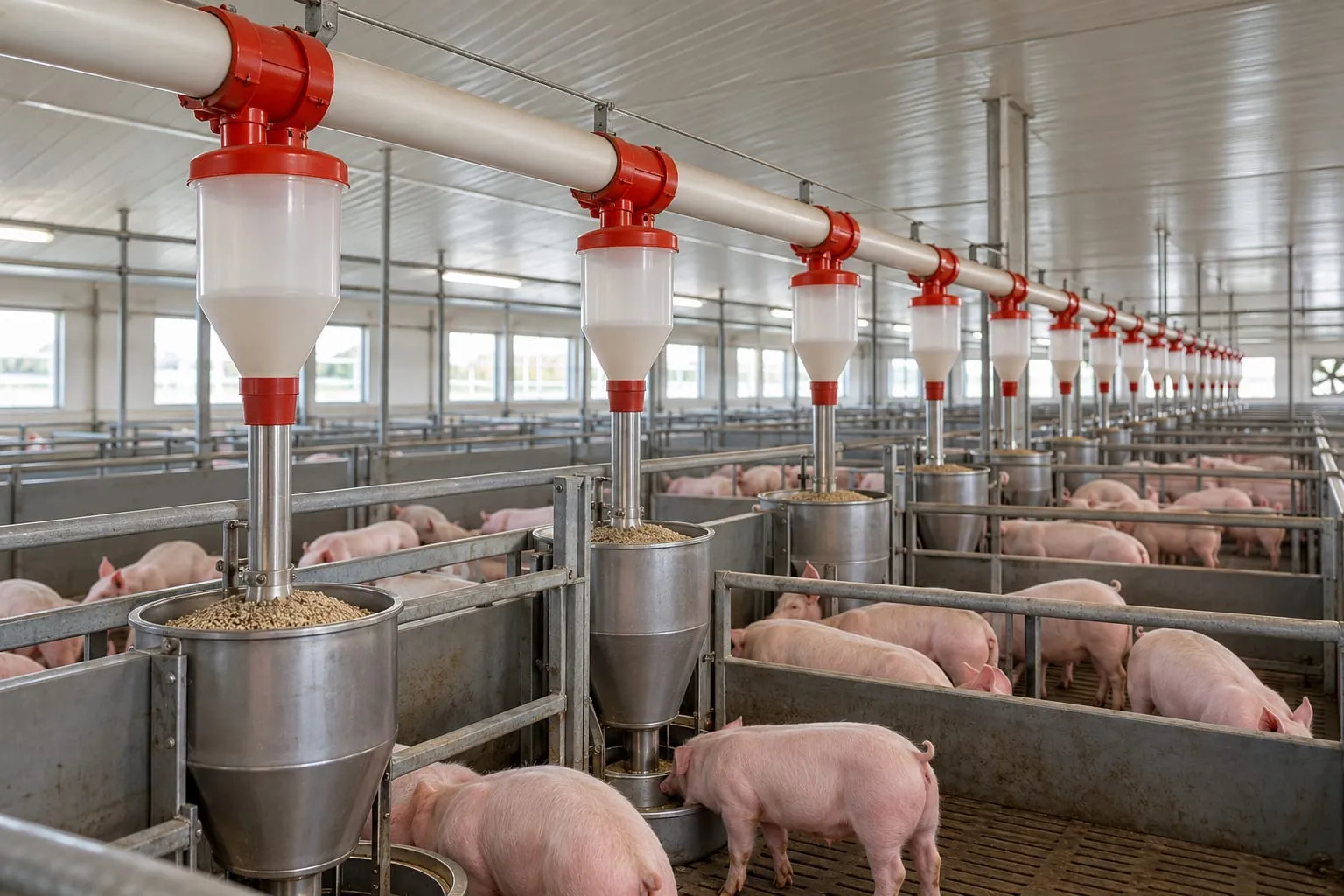
Feeding is the biggest running cost of a pig farm. Automatic systems carry feed from the silo to each pen, give a measured ration and cut waste and labour. We supply silos, chain-disc and auger lines, dosing cups, feeders, troughs and liquid feeding systems.

8
Products
4
Solutions
Yes
Customised to project
Chain-Disc Feeding Lines for a pig farm

Products in this category

Each product can be customised to your project. Reference values are typical and are confirmed before quotation.

  • E01

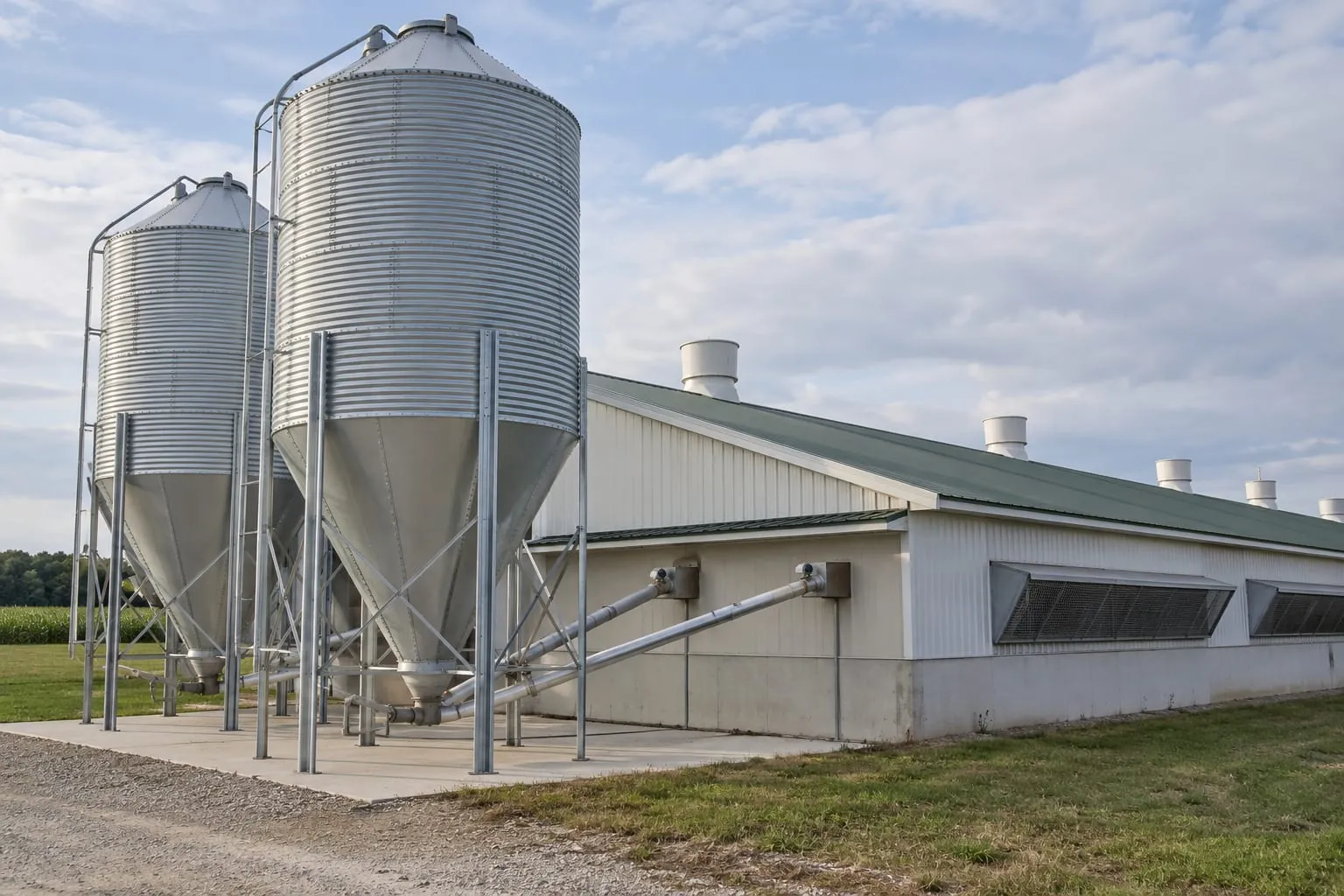
    Feed Silos

    Galvanised silos that store bulk feed beside the pig house and feed the lines.

    • Cone bottom for complete discharge
    • Galvanised steel, built for outdoor use
    • Sized to the herd and delivery cycle
    Material
    Galvanised corrugated steel sheet
    Typical capacity
    About 3–20 t per silo (reference)
    Bottom
    Cone with outlet to auger or feeding line
  • E02

    Chain-Disc Feeding Lines

    Pipe-and-disc feeding lines that carry feed from the silo to every pen.

    • One line serves a whole row of pens
    • Gentle feed handling
    • Drop points set by the pen plan
    Principle
    Chain with plastic discs in a closed tube
    Typical tube diameter
    About 45–110 mm (reference)
    Feed form
    Meal or pellet
  • E03

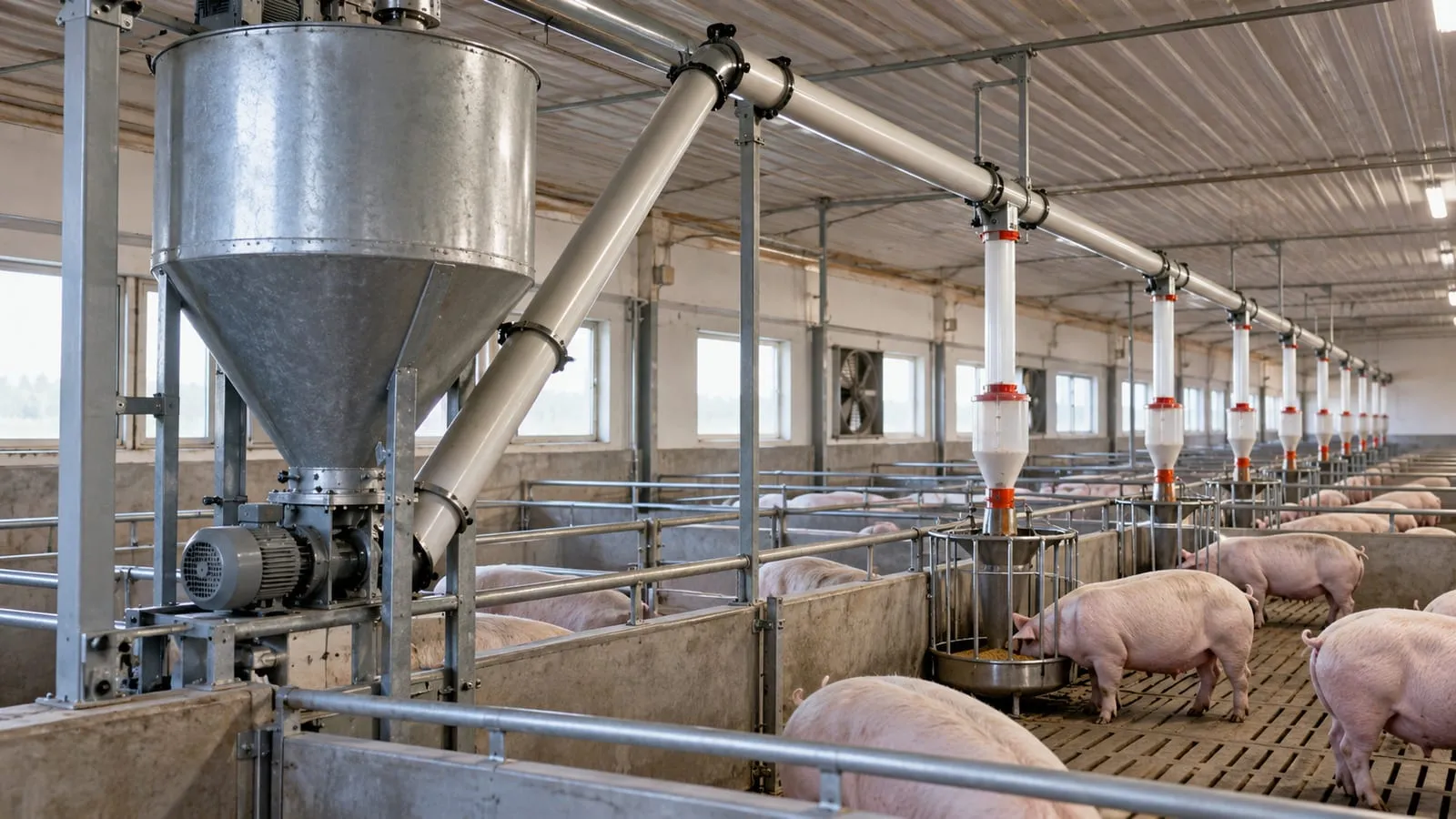
    Auger Feeding Systems

    Auger conveyors that move feed from silos to hoppers and feeding lines.

    • Simple and strong feed transport
    • Works with meal and pellet
    • Run length and angle set by the plant
    Principle
    Screw conveyor in a tube
    Feed form
    Meal or pellet
    Material
    Galvanised steel tube, steel screw
  • E04

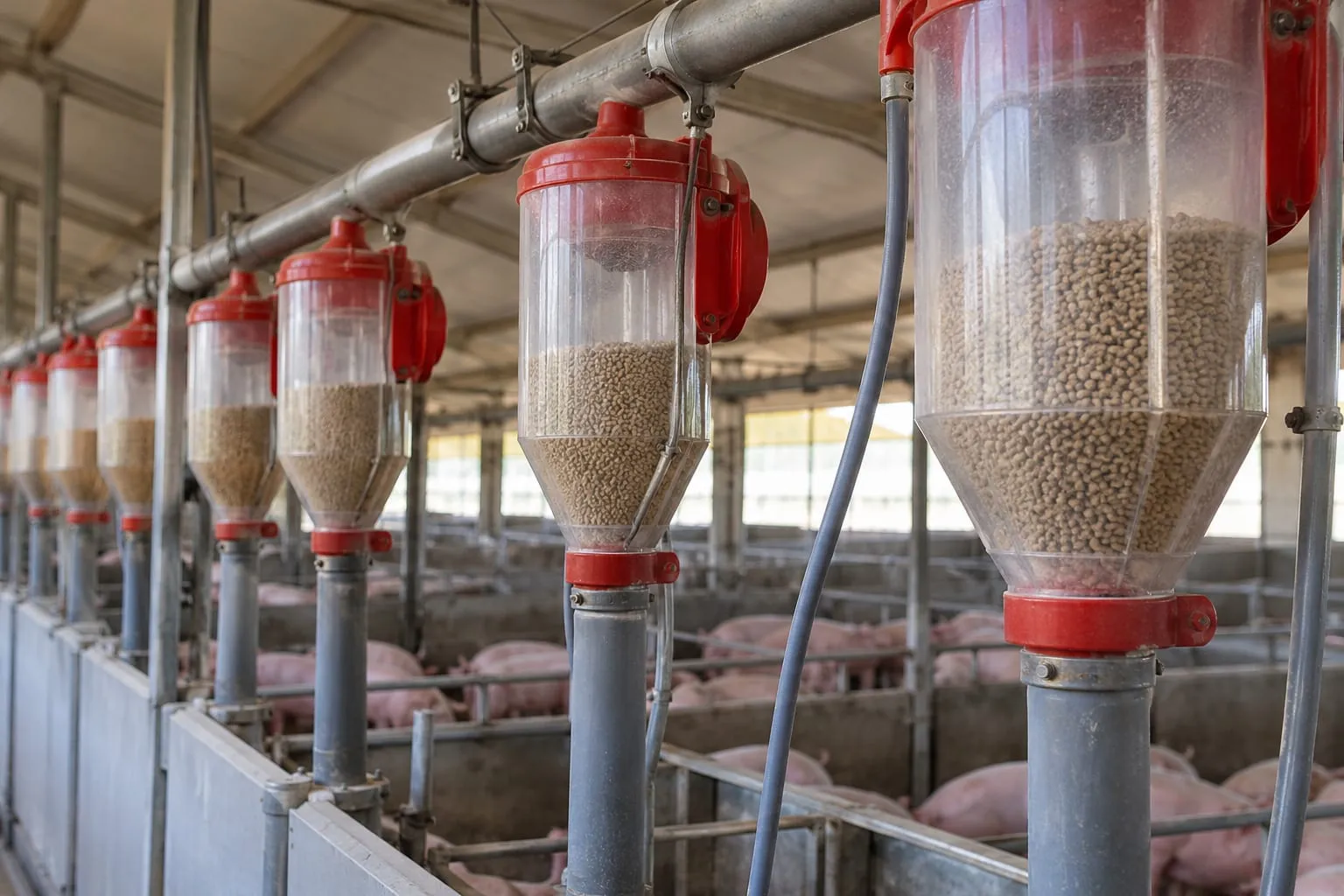
    Feed Dosing Cups

    Adjustable dosing cups that give each sow or pig a measured portion.

    • Measured portion at each feeding
    • Adjustable by the stockperson
    • Low-cost controlled feeding
    Principle
    Volume cup hanging from a feeding line
    Typical settings
    About 0.5–3.5 kg of feed (reference)
    Material
    Clear plastic with adjustment
  • E05

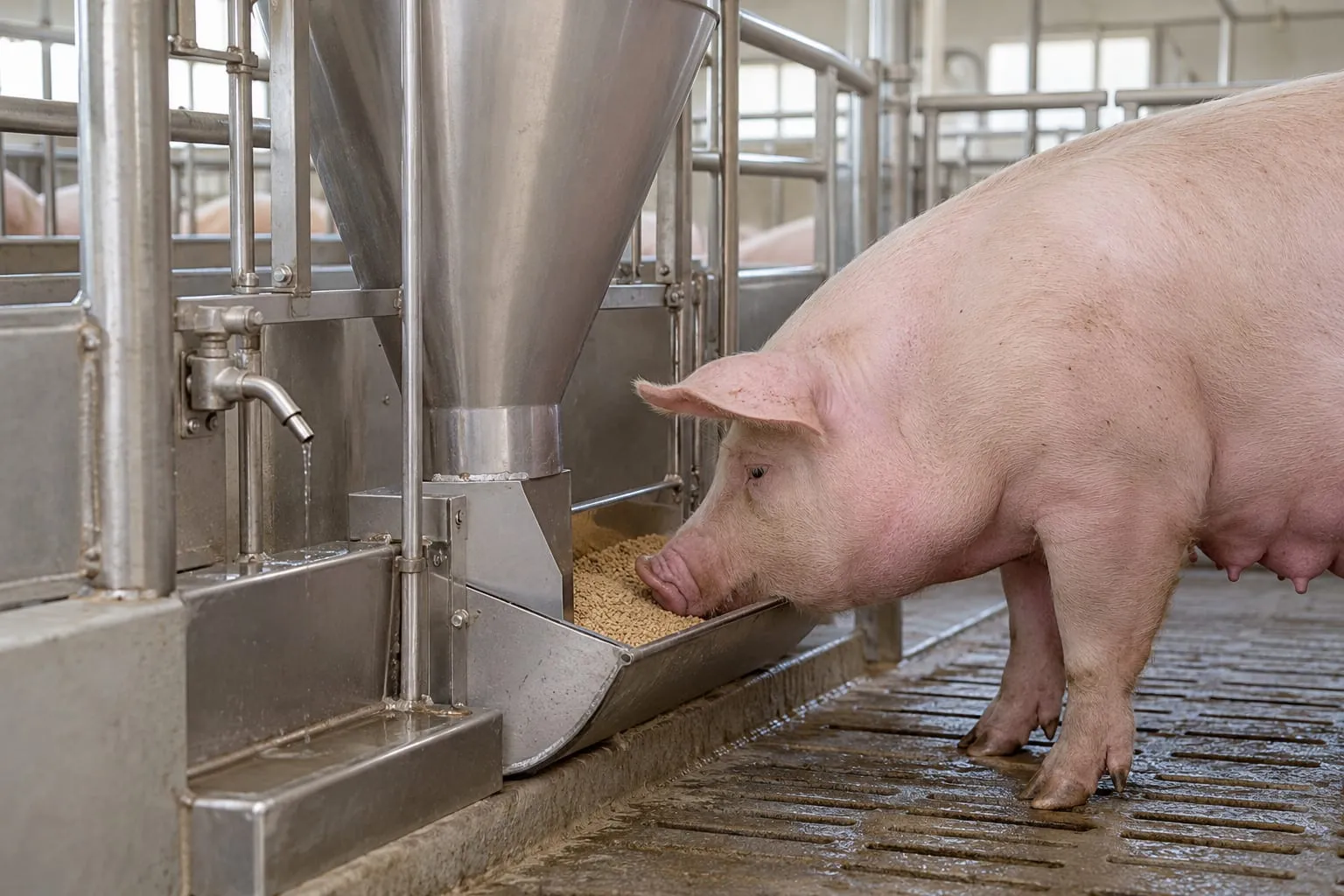
    Dry-Wet Feeders

    Feeders with a water nipple at the trough so pigs can mix feed and water as they eat.

    • Feed and water in one trough
    • Less wasted feed
    • Stainless steel for easy cleaning
    Material
    Stainless steel trough and hopper
    Feed form
    Meal or pellet
    Water
    Nipple or bowl at the trough
  • E06

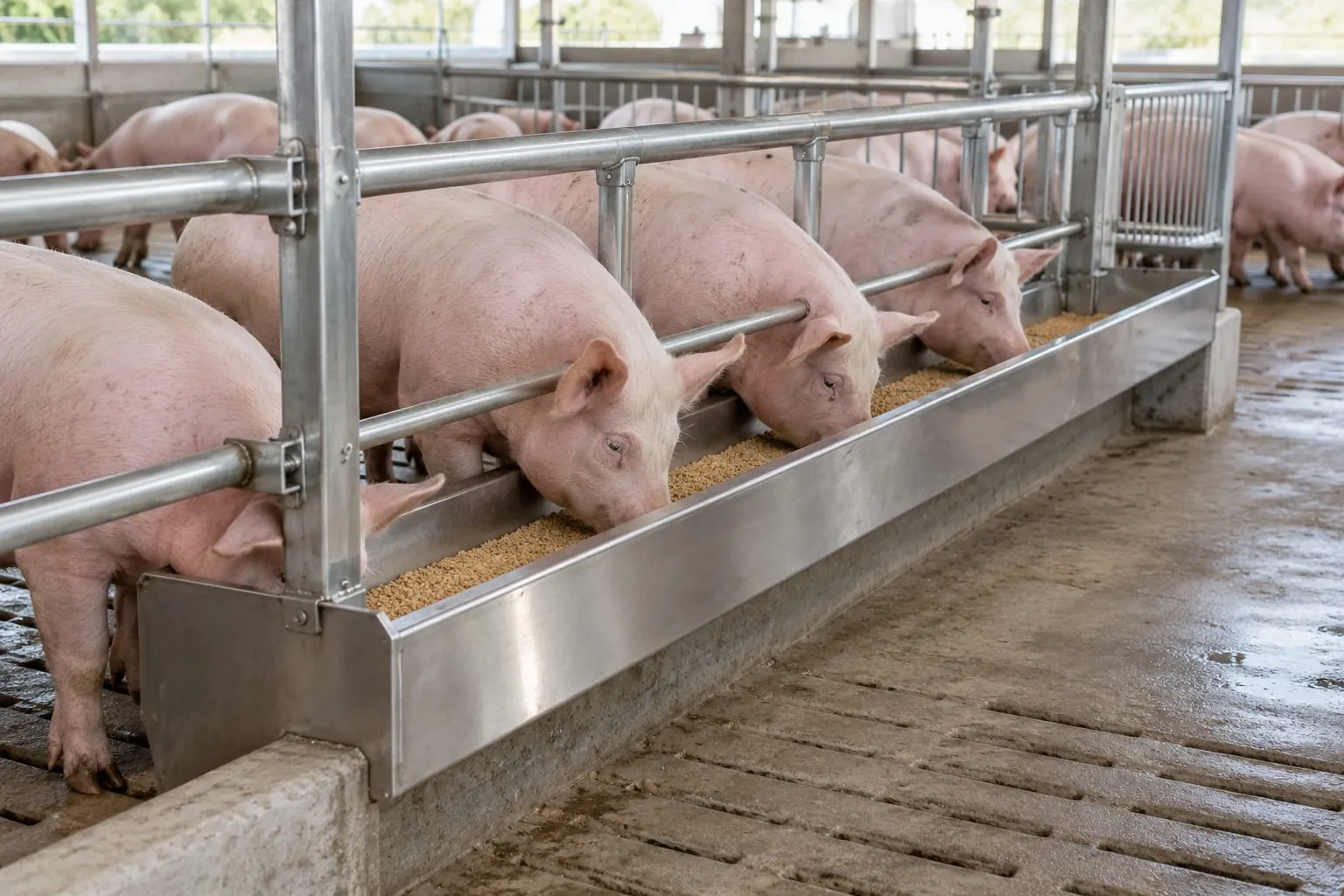
    Stainless Steel Feed Troughs

    Long troughs for group feeding of sows and finishing pigs.

    • Resists corrosion
    • Space for several pigs at once
    • Easy to clean
    Material
    Stainless steel
    Typical space per pig
    About 0.3–0.5 m of trough length (reference)
    Mounting
    Pen front or floor
  • E07

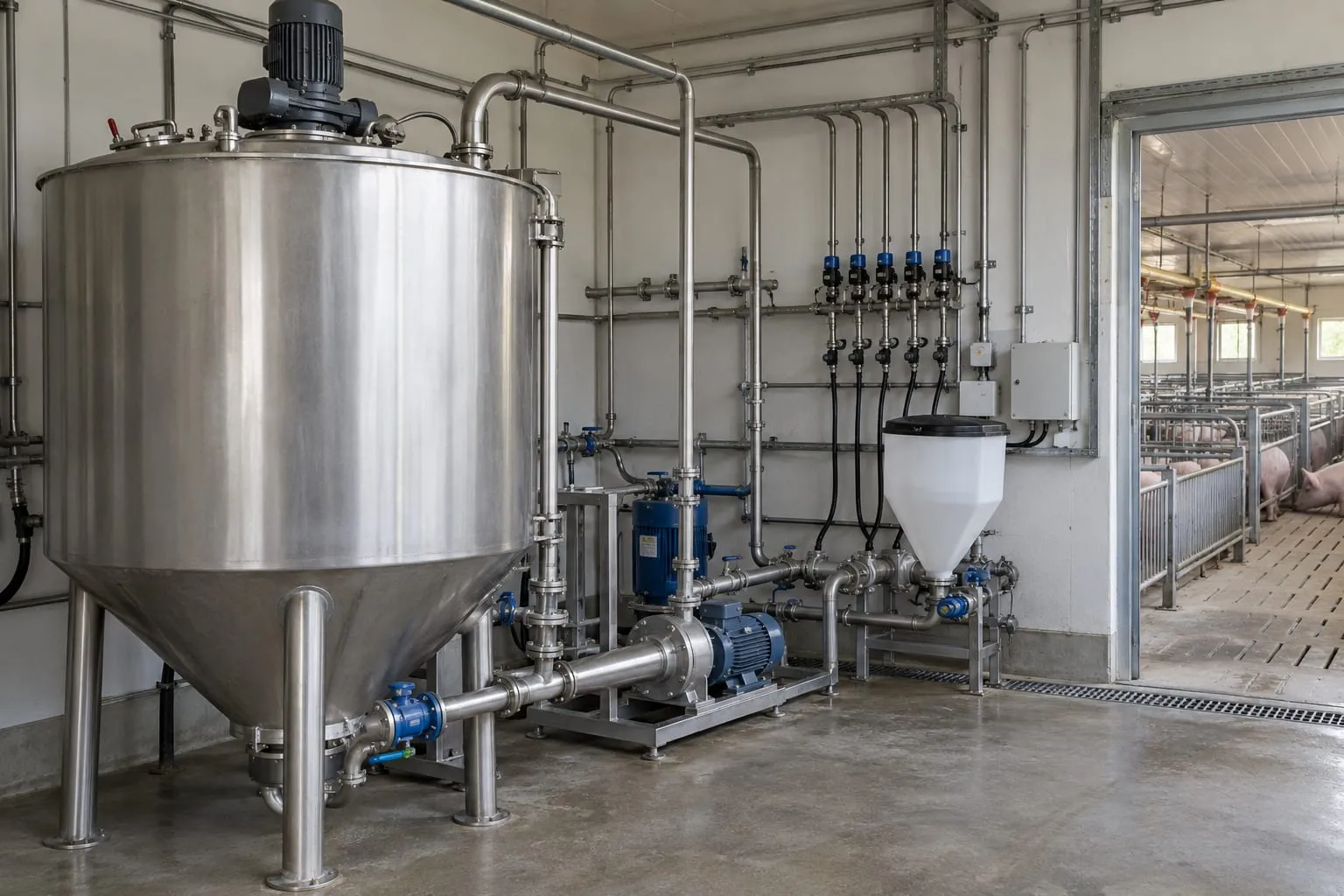
    Liquid Feeding Systems

    Mixing tanks and pipes that deliver wet feed to the troughs.

    • Precise recipes by stage
    • Can use liquid by-products
    • Controlled by software
    Principle
    Mixing tank, pumps, pipes and valves
    Control
    Computer with recipe management
    Material
    Stainless steel tanks and fittings
  • E08

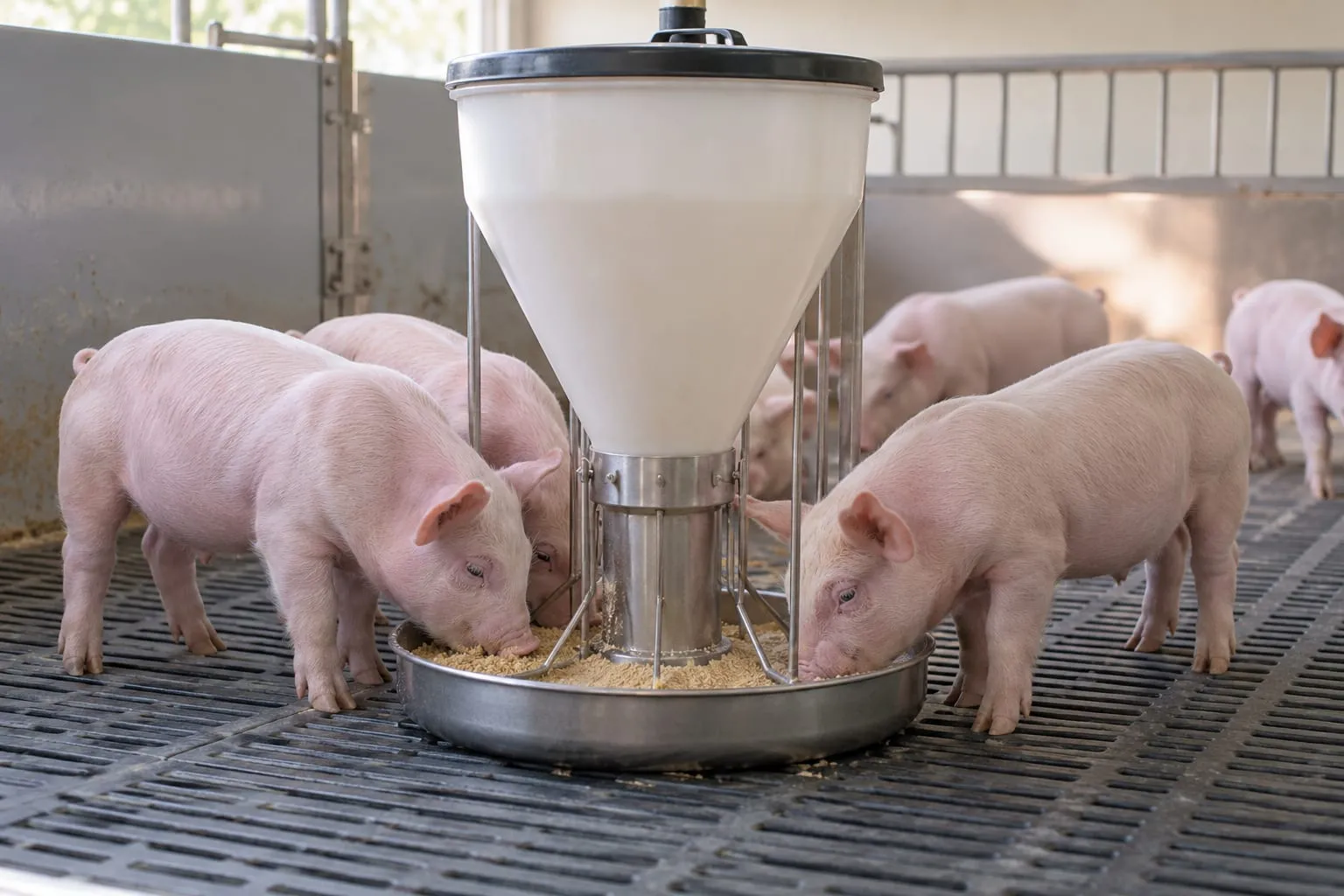
    Piglet Creep Feeders

    Small feeders that let suckling piglets start eating solid feed before weaning.

    • Starts solid-feed intake before weaning
    • Shallow tray for small piglets
    • Easy to refill and clean
    Material
    Plastic or stainless steel
    Shape
    Round tray with hopper
    Capacity
    Small, refilled daily

Compare at a glance

Automatic Feeding Systems: comparison
ProductWhat it doesTypical reference
Feed SilosGalvanised silos that store bulk feed beside the pig house and feed the lines.Material: Galvanised corrugated steel sheet
Chain-Disc Feeding LinesPipe-and-disc feeding lines that carry feed from the silo to every pen.Principle: Chain with plastic discs in a closed tube
Auger Feeding SystemsAuger conveyors that move feed from silos to hoppers and feeding lines.Principle: Screw conveyor in a tube
Feed Dosing CupsAdjustable dosing cups that give each sow or pig a measured portion.Principle: Volume cup hanging from a feeding line
Dry-Wet FeedersFeeders with a water nipple at the trough so pigs can mix feed and water as they eat.Material: Stainless steel trough and hopper
Stainless Steel Feed TroughsLong troughs for group feeding of sows and finishing pigs.Material: Stainless steel
Liquid Feeding SystemsMixing tanks and pipes that deliver wet feed to the troughs.Principle: Mixing tank, pumps, pipes and valves
Piglet Creep FeedersSmall feeders that let suckling piglets start eating solid feed before weaning.Material: Plastic or stainless steel

Selection guide

How to choose

  1. 1

    Know your feed form

    Meal and pellet need different lines and feeders.

  2. 2

    Plan the silo and the line together

    Silo volume, line length and the number of drops depend on one another.

  3. 3

    Decide how precise feeding must be

    Dosing cups, precision feeders and electronic stations give different levels of control.

  4. 4

    Plan for cleaning

    Feeders, troughs and lines must be easy to clean, especially for liquid feed.

Frequently asked questions

Can one system serve all stages of production?

Usually the same silo and line concept is used throughout, with different feeders and portion settings for each stage.

What feed types work with the lines?

Meal and pellet feed are common. Tell us the feed form so the right line and feeders are chosen.

Can the system be extended later?

Yes, if the plan allows for it. We can size silos and lines for future expansion.

Can I use my own feed mill with the line?

Yes. Bulk trucks or augers carry the finished feed to farm silos, which feed the lines.

What power does a feeding line need?

A gear motor per line, plus controls. We list the power with the design.

How do I avoid feed bridging in silos?

A cone with the right angle, smooth walls and proper ventilation reduce bridging. We design the silo for your feed.

Are sizes and configurations fixed?

No. Dimensions, materials and configuration are customised to your herd size, climate and local rules, and agreed with you before quotation.

Are the specifications on your product pages final?

They are typical reference values to help you compare. Final specifications are confirmed with you before quotation.

Who installs the equipment?

Our installation teams install and commission the equipment. The scope for each project is agreed in the contract.

What warranty do you give?

Warranty terms depend on the equipment and are agreed per project in the contract.

All frequently asked questions →

Enquiry

Tell us about your project

Share your herd size, land and target market — we will come back with a layout and an equipment list.

What happens next

  1. 1

    You send your project details

    Herd size, site, land and target start date. Rough numbers are enough.

  2. 2

    We reply with a layout and an equipment list

    Our team reviews your requirements and proposes a configuration.

  3. 3

    We agree the details with you

    Sizes, materials and scope are confirmed before any quotation.

50
Installation teams
3,000
Completed projects
50+
Countries served
  • Email: sales@hnyzgroup.com
  • +86 185 3894 3078
  • Jiaozuo City, Henan Province, China
  • Founded in 2005 · 300 employees
  • Factory visits welcome: contact us to arrange

Send your inquiry

Your details are used only to answer your inquiry — see our Privacy Policy.

Request a Quote