Start with the production system
Planning a sow farm begins with two decisions: how many sows, and what you sell. A farrow-to-wean farm sells weaned piglets. A farrow-to-finish farm keeps the pigs until market weight. The choice decides which houses you need, how large they are and how much feed and manure you handle.
Plan the batches
Most modern farms use a batch system. Sows are bred and farrow in groups on a regular rhythm, often weekly. The pig cycle then gives each house a number of weeks:
| Stage | What happens | Typical time (reference) |
|---|---|---|
| Mating and gestation | Sows are bred, checked and kept through pregnancy | About 114 days of pregnancy |
| Farrowing | Sows give birth and nurse piglets | Often 3–4 weeks of lactation |
| Nursery | Weaned piglets grow to the finishing weight start | Several weeks after weaning |
| Finishing | Pigs grow to market weight | Several months |
These times vary by genetics, management and market, so use them only as a starting point. Your own numbers decide how many crates, pens and stalls you need.
Houses for each stage
| House | Main equipment | Planning notes |
|---|---|---|
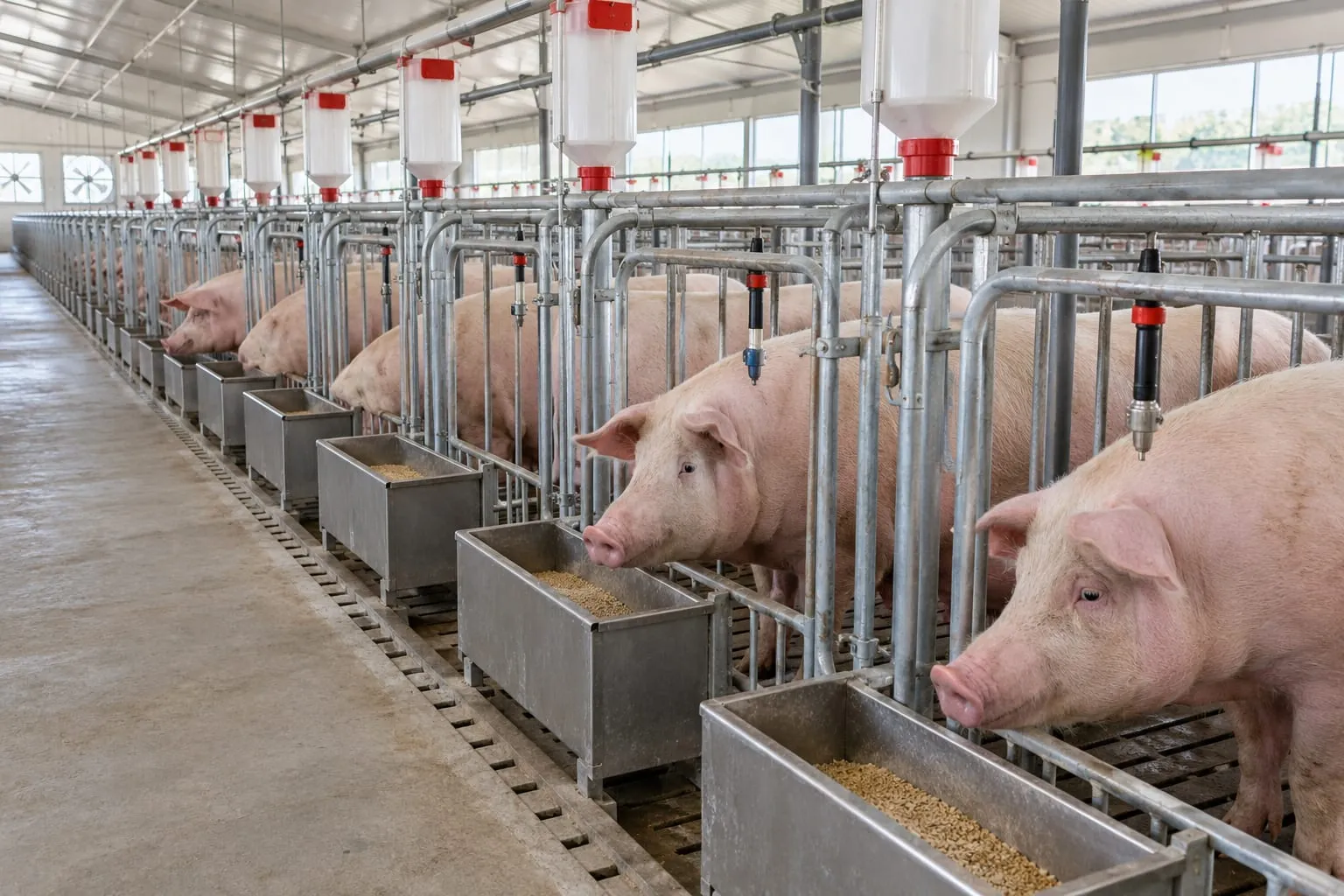
| Mating and gestation | Stalls or group pens, feeding, heat detection | Choose the housing system by local rules and management |
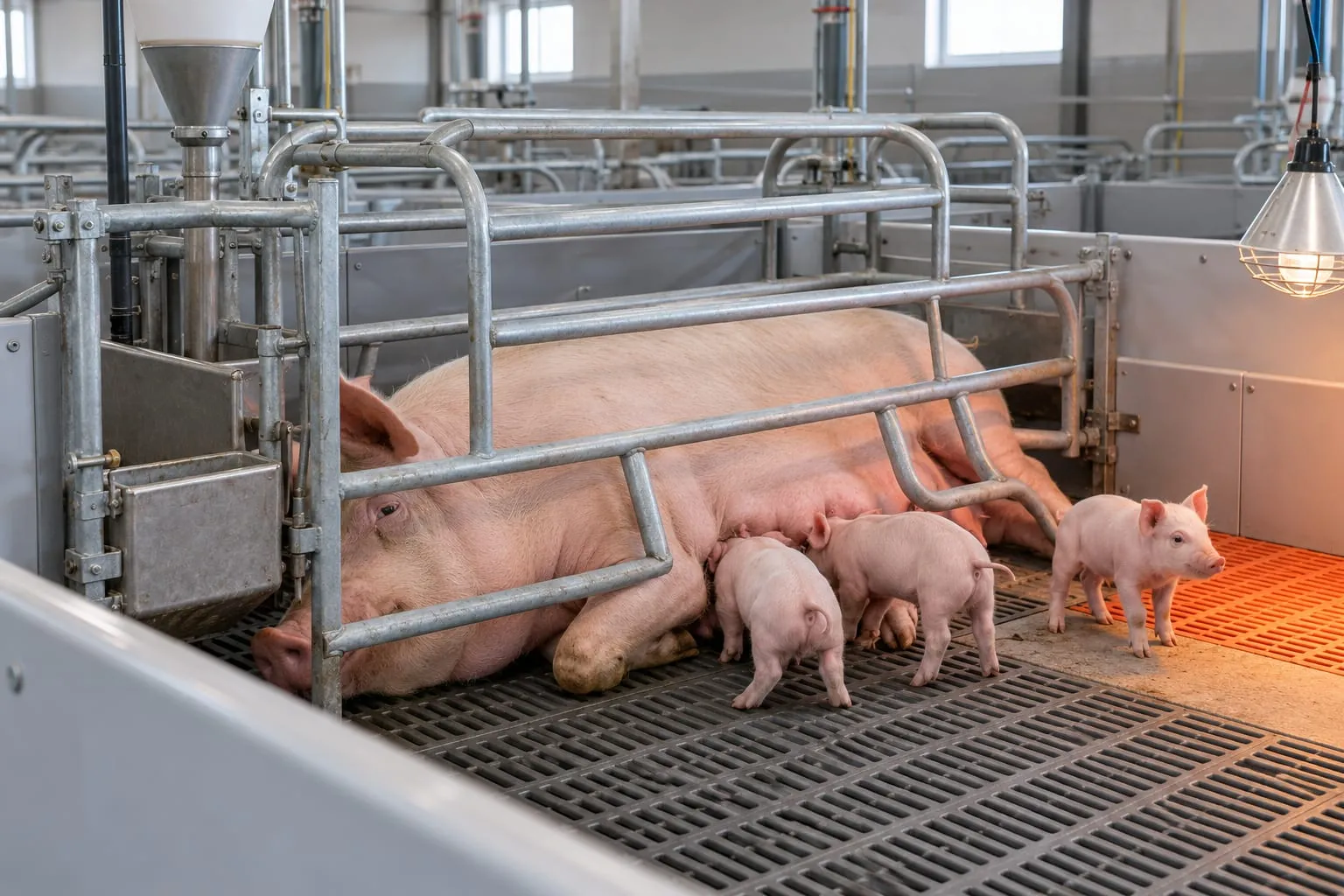
| Farrowing | Crates or welfare pens, creep heating, feeders | Two climates in one room: sow and piglets |
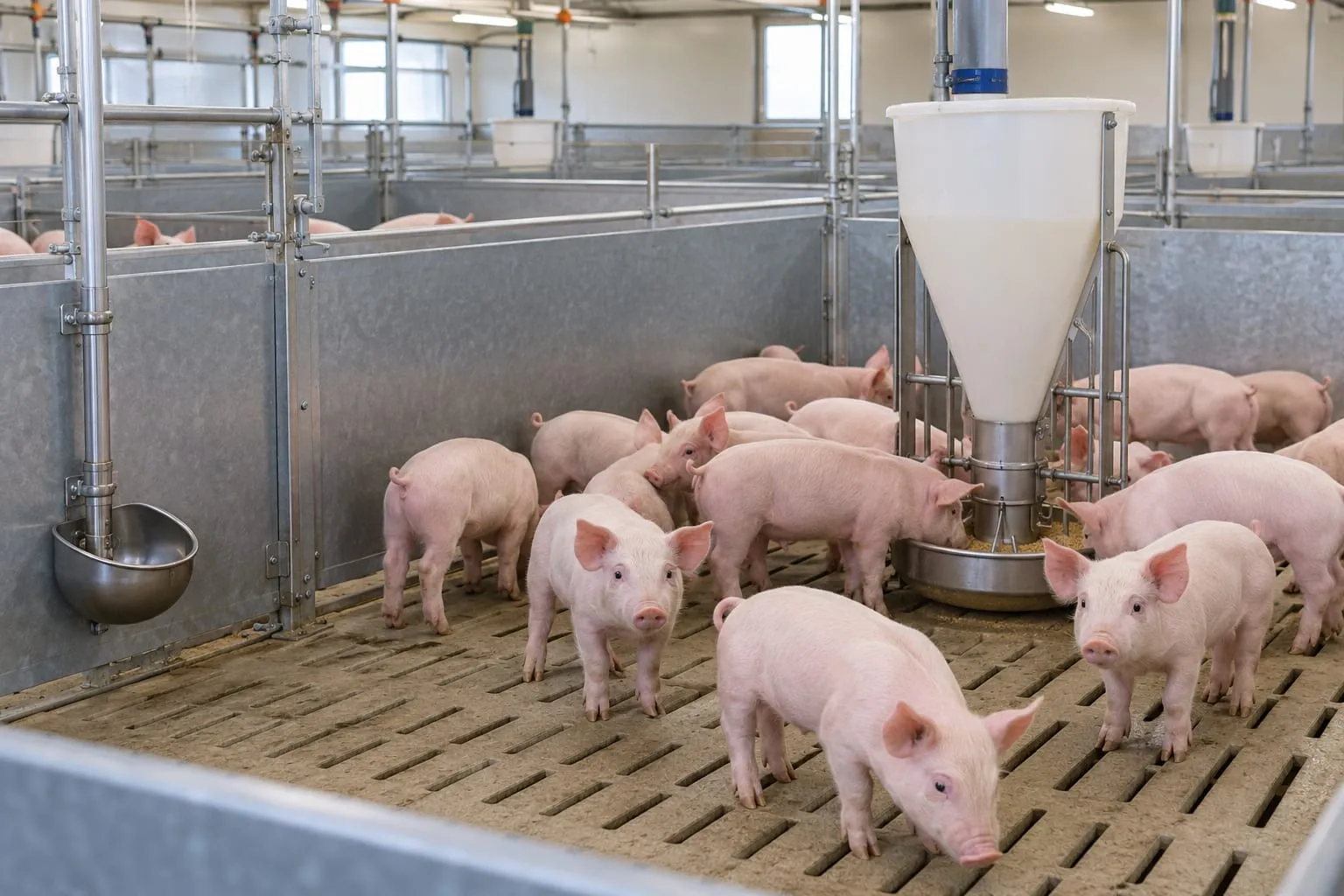
| Nursery | Pens, floors, feeders, heating | Weaned piglets need steady warmth and clean water |
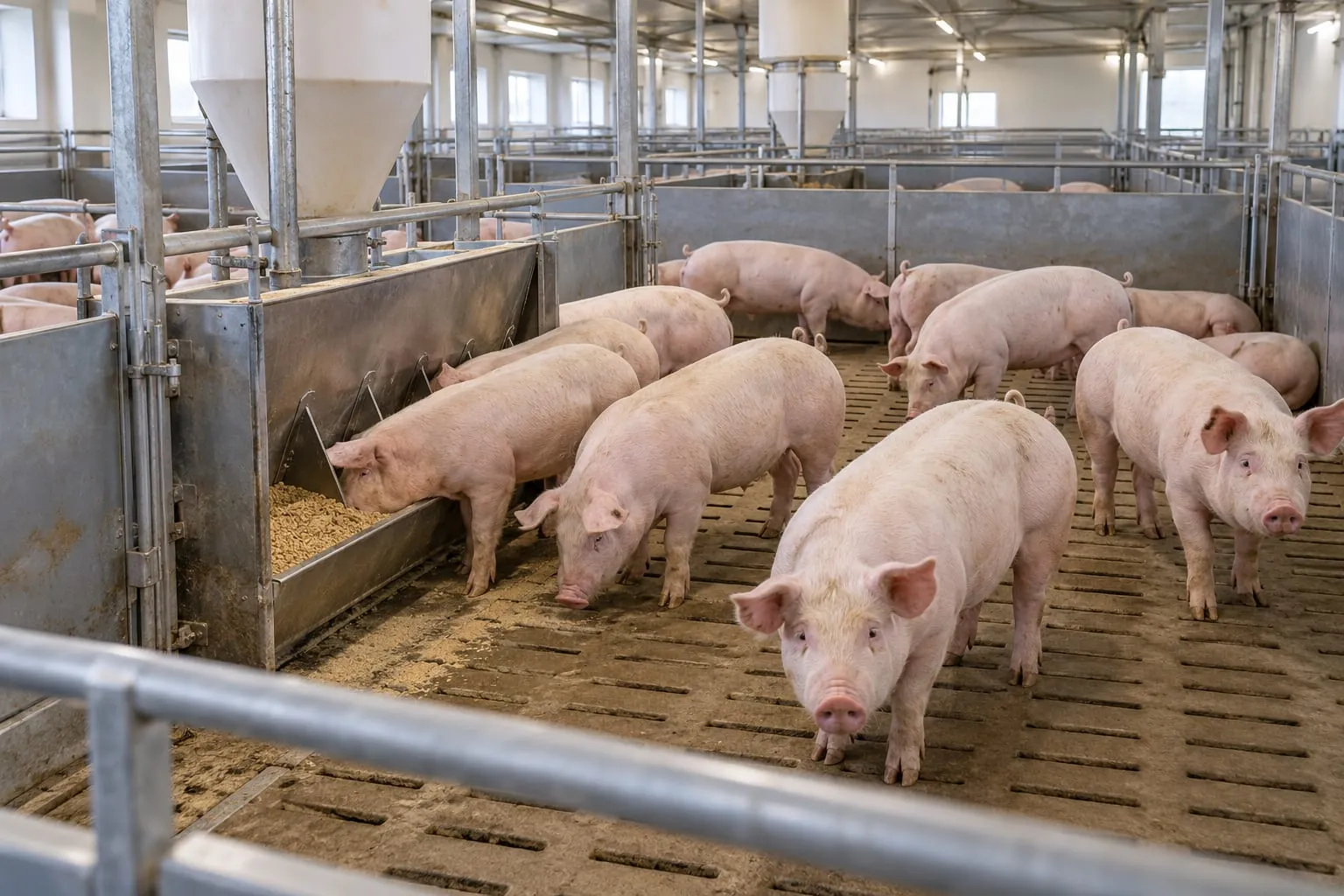
| Finishing | Pens, feeding lines, ventilation | The largest number of pig places |
| Boar stud and AI centre | Boar pens, collection room, laboratory | Clean and dirty areas apart |
Services around the houses
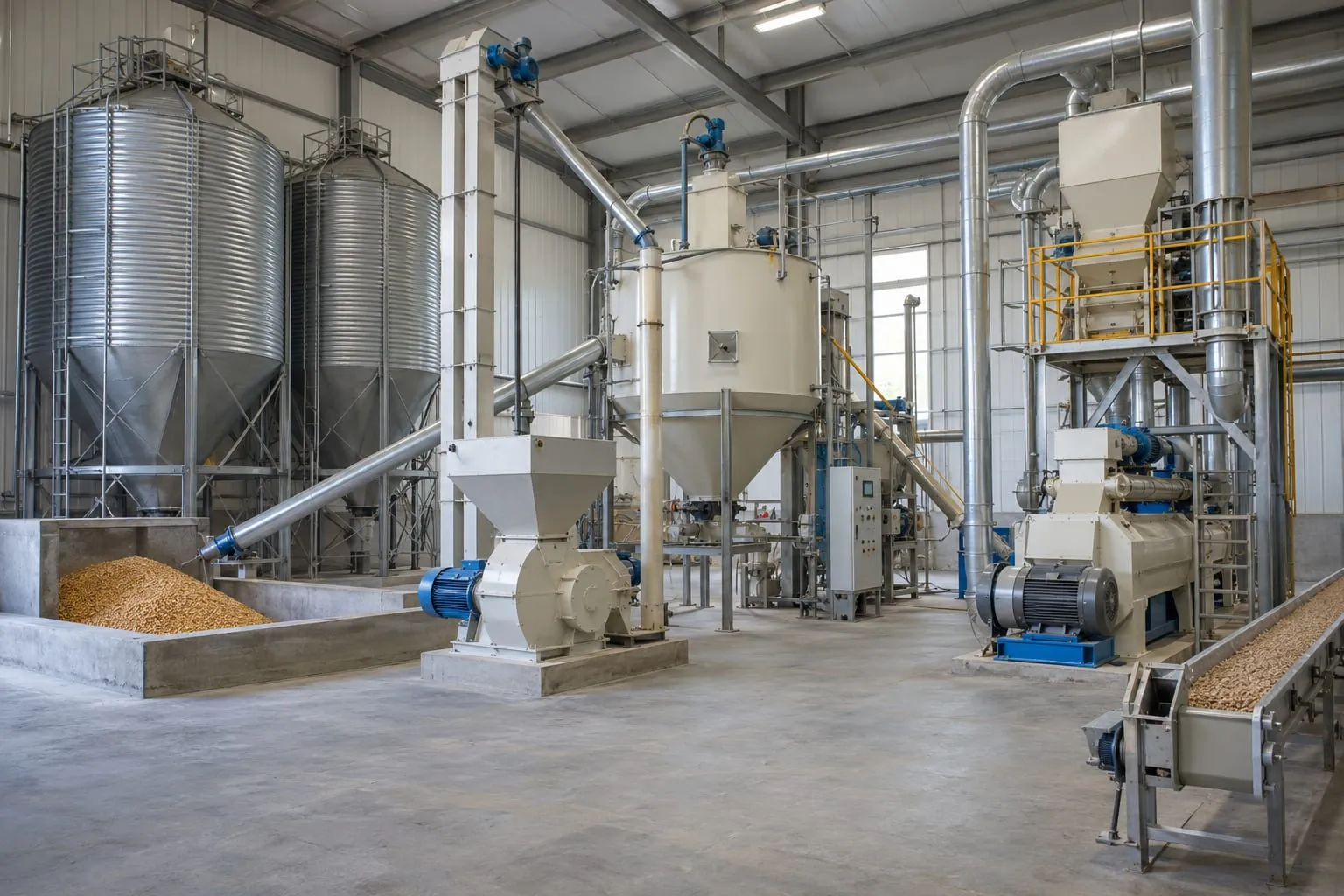
- Feed: buy it, or make it in a feed mill, and deliver it to silos beside each house.
- Water: supply, filtering and drinkers matched to each stage.
- Power: ventilation and heating need a steady supply; plan for power cuts.
- Manure: decide the route early. See manure treatment.
- Biosecurity: wash and drying stations, a personnel entry and a loading point at the boundary. See biosecurity.
Draw the flows first
Before you place the houses, draw four flows on the site plan: pigs, feed, people and manure. Keep clean and dirty routes apart, and put the loading point at the boundary. A good layout makes every later decision easier.
Leave room to expand
If you plan to grow, decide now where the next houses and services will go. Master layouts that allow for later phases cost much less than rebuilding.
Get a layout and an equipment list
HNYZ Group plans pig farms from the master layout to commissioning. Send us your herd size, site and timeline through the contact form, and we reply with a layout and an equipment list. See our turnkey pig farm page for how a project runs.